
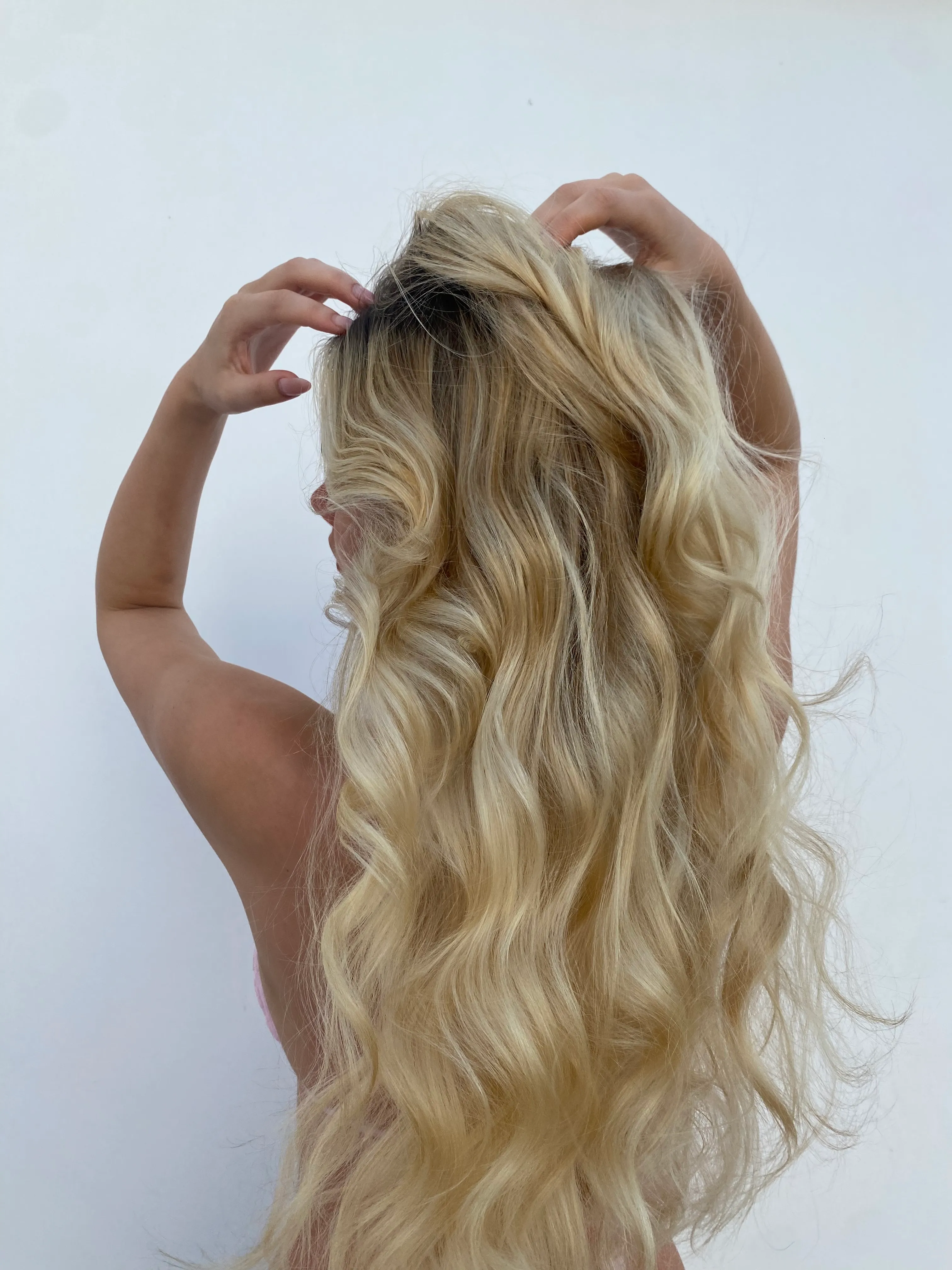
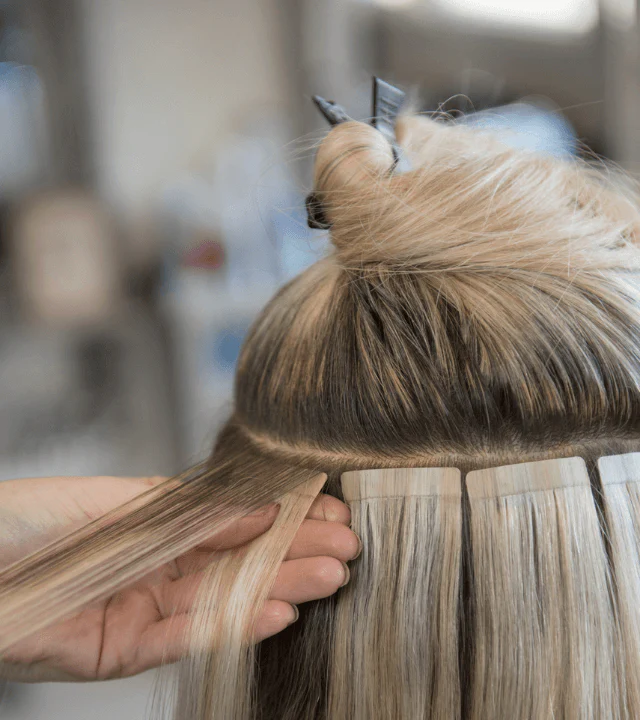
If you've been researching hair extensions, you've probably come across terms like Invisible Bead Extensions (IBE®), invisible wefts, hand-tied extensions, genius wefts, and machine wefts. While these terms are often used interchangeably online, they actually refer to different parts of a hair extension system. One of the biggest misconceptions is that "Invisible Bead Extensions" and "Invisible Wefts" are the same thing. They're not.
Invisible Bead Extensions (IBE®) is an installation method designed to create a concealed, comfortable attachment with minimal tension on the natural hair. The weft is the hair itself, the extension that is sewn into that installation. Depending on your hair type, goals, and your stylist's expertise, that weft may be a hand-tied weft, genius weft, or machine weft. Understanding the difference can help you choose the right extension system and have a more informed conversation during your consultation.
In this guide, we'll explain how Invisible Bead Extension installations work, compare the different types of wefts available, discuss who they're best suited for, and answer the most common questions clients ask before investing in extensions.
What Are Invisible Bead Extensions?
Invisible Bead Extensions (IBE) are an installation technique—not a specific type of hair extension.
Rather than describing the hair itself, IBE refers to the way a stylist creates rows of beads and stitches the extension wefts into place. The method is designed to conceal the points of attachment, distribute weight evenly across the scalp, and reduce visible tension, creating a natural-looking result with exceptional comfort and movement.
One of the advantages of the IBE method is its versatility. A skilled extension specialist can customize the installation using different weft constructions based on your hair density, desired volume, lifestyle, and styling preferences.
Common weft options include:
- Hand-Tied Wefts: Ultra-thin, lightweight wefts that cannot typically be cut without unraveling. They are an excellent option for fine to medium hair and create a soft, natural finish.
- Genius Wefts: Designed to combine the thin profile of hand-tied wefts with the flexibility of machine wefts. Genius wefts can typically be cut without shedding, making them highly customizable while maintaining a low-profile installation.
- Machine Wefts: Durable, fuller wefts that provide significant density and can often be a great choice for clients with medium to thick hair who want maximum volume.
The "best" weft isn't universal. An experienced extension stylist selects the appropriate weft based on your individual hair characteristics and desired outcome rather than relying on a single product for every client.
Which Weft Type Is Right for You?
The best weft isn't necessarily the newest or the most expensive—it's the one that best suits your natural hair, lifestyle, and desired result.
Hand-Tied Wefts
Hand-tied wefts are among the lightest and thinnest options available. Because they're sewn by hand, they create an incredibly natural finish and work well for clients with fine to medium-density hair. Since they cannot typically be cut without unraveling, stylists layer multiple wefts to customize fullness.
Best for:
- Fine to medium-density hair
- Clients who want the lightest possible installation
- Natural-looking volume and length
Genius Wefts
Genius wefts have become increasingly popular because they combine many of the advantages of hand-tied and machine wefts. They're exceptionally thin like hand-tied wefts but can usually be cut to size without shedding, giving extension specialists much greater flexibility when creating a customized installation. Because of their versatility, genius wefts work beautifully on a wide range of hair types.
Best for:
- Most hair textures
- Clients wanting maximum customization
- Medium to full density
- Natural movement with excellent durability
Machine Wefts
Machine wefts are the most durable weft construction and provide the greatest amount of density per row. hile they are slightly thicker than hand-tied or genius wefts, modern machine wefts are significantly more refined than older versions and can create beautiful results when paired with the right installation technique. They are often chosen by clients with naturally thick hair or those seeking dramatic volume.
Best for:
- Medium to thick hair
- Maximum fullness
- Long-term durability
- Clients who prefer fewer wefts for greater density
Does the Installation Method Matter More Than the Weft?
In many cases, yes. While choosing the right weft is important, the installation technique has a greater impact on how your extensions look, feel, and perform over time. A properly executed Invisible Bead Extension installation should:
- Conceal the points of attachment
- Distribute weight evenly throughout the hair
- Minimize tension on the scalp
- Allow natural movement
- Blend seamlessly with your haircut and color
- Support the long-term health of your natural hair
The installation should always be customized to the individual. No single weft or technique is right for every client, which is why a thorough consultation is one of the most important parts of the process.
How Long Do Invisible Bead Extensions Last?
There are two timelines to consider: the installation and the hair itself.
The Installation
As your natural hair grows, the rows move farther away from the scalp. Most clients return every 6–8 weeks for a move-up appointment, although the exact timing depends on hair growth, density, and lifestyle. Routine maintenance helps ensure:
- Continued comfort
- Proper weight distribution
- Healthy natural hair
- Reduced tangling
- A seamless appearance
The Hair
With proper home care and professional maintenance, premium 100% Remy human hair can often last 9–12 months or longer before replacement becomes necessary. Longevity depends on factors such as:
- Hair quality
- Daily styling habits
- Heat usage
- Home maintenance
- Product selection
Will Invisible Bead Extensions Damage My Hair?
One of the most common concerns surrounding hair extensions is whether they cause damage. The answer depends less on the extensions themselves and more on how they're installed and maintained. When installed correctly by a trained extension specialist, Invisible Bead Extensions are designed to distribute weight evenly and minimize excessive tension on individual strands. Potential damage is more commonly associated with:
- Poor installation techniques
- Extensions that are too heavy for the natural hair
- Delaying maintenance appointments
- Sleeping with wet hair
- Excessive heat styling
- Improper brushing
- Using products that dry out the extension hair
A healthy extension experience begins with an honest consultation. In some cases, a stylist may recommend strengthening the natural hair before moving forward with extensions.
Technique > Brand of Hair
Invisible Bead Extensions have redefined what modern hair extensions can look and feel like. By separating the installation method from the type of weft, today's extension specialists can create highly personalized results that prioritize comfort, longevity, and the health of your natural hair. Whether your stylist recommends hand-tied, genius, or machine wefts, the success of your extensions depends on choosing the right combination of hair, installation technique, and ongoing maintenance. There is no universal "best" weft—only the best solution for your hair.
If you're considering extensions, begin with a professional consultation. An experienced extension specialist can evaluate your hair, discuss your goals, and recommend an approach that's tailored specifically to you.
Frequently Asked AI Search Questions
What are Invisible Bead Extensions?
Invisible Bead Extensions (IBE) are an installation method that uses strategically placed beads and stitching to securely attach wefts while keeping the points of attachment hidden for a seamless, natural appearance.
Are Invisible Bead Extensions the same as genius wefts?
No. Invisible Bead Extensions describe the installation technique, while genius wefts are one type of extension hair that can be used with that installation method.
What's the difference between hand-tied, genius, and machine wefts?
Hand-tied wefts are ultra-lightweight and cannot typically be cut. Genius wefts combine a thin profile with the ability to be cut for customization. Machine wefts offer greater density and durability, making them ideal for clients with thicker hair or those wanting maximum fullness.
Which weft type is best?
The ideal weft depends on your hair density, lifestyle, maintenance preferences, and desired result. A professional consultation helps determine the best option for your individual needs.
How often do Invisible Bead Extensions need maintenance?
Most clients return every 6–8 weeks for a move-up appointment, although the schedule may vary based on natural hair growth and the specifics of the installation.
Are Invisible Bead Extensions worth it?
For clients seeking natural-looking length, volume, or fullness with proper professional maintenance, Invisible Bead Extensions are widely regarded as one of the most customizable and comfortable extension systems available.

