


Did you have COVID-19? Are You Shedding Excessively? It’s Not Your Imagination.
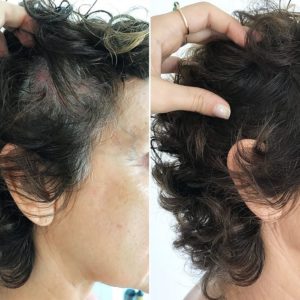
Although the list of COVID-19 symptoms from the U.S. CDC does not include hair loss, hairdressers and dermatologists are seeing an increase in the number of clients and patients suffering from excessive shedding, says Shilpi Khetarpal, MD, a dermatologist at Cleveland Clinic. Here at Oscar Giovanni Salon & Spa, we have unofficially termed it COVID-19 Alopecia.
Dr. Khetarpal explains that they [doctors] have been “seeing patients who had COVID-19 two to three months ago and are now experiencing hair loss.” The phenomenon, called telogen effluvium, is a form of hair loss resulting from an abnormal shift in the hair growth cycle. Generally, there are a number of things that can cause this condition; it is something that we, as hairdressers, often encounter with our clients regardless of COVID-19.
Dr. Khetarpal goes on to explain that “essentially, it is a temporary hair loss from excessive shedding due to a shock to the system. There are several common triggers, such as surgery, major physical or psychological trauma, any kind of infection or high fever, extreme weight loss or a change in diet. Hormonal changes, such as postpartum or menopause, can also cause hair loss.”
The Hair Growth Cycle
The hair growth cycle consists of three phases: anagen, catagen, and telogen (growth, resting, and shedding). Normally, 90% of the hair is in the anagen phase, with 5% in the catagen and 5% in shedding. On average, most people shed somewhere between 50-150 hairs each day. Jenn Lonzerj reports that in those suffering from “telogen effluvium, the proportion of hair follicles in the telogen phase increases significantly, up to 50%, leading to mass shedding”. Notedly, there’s generally a two- to the three-month lag between the stressful event and the onset of hair loss. Understandably, many men and women are very concerned, especially if they are unaware of the condition. It is important to remember that it generally only lasts between six to nine months and most cases resolve on their own unless it’s related to medication or a nutritional deficiency.
Risk Factors
According to Dr. Khetarpal, there are a number of risk factors associated with COVID-19 related hair loss. The first is a genetic predisposition. Some individuals may have had an extreme bout of COVID-19 and did not experience significant hair loss while others may have a mild illness who did. This can be attributed to a genetic predisposition. Other things such as postpartum effluvium (telogen gravidarum), typhoid, malaria, tuberculosis, HIV infection, physical and/or emotional stress, serious injuries, eating disorders, and crash diets can induce an abnormal shedding cycle. Medications like oral retinoids (etretinate and acitretin), oral contraceptives, antithyroid drugs, anticonvulsants, hypolipidemic drugs, heavy metals, beta blockers, captopril, and/or amphetamines are oftentimes offenders. Endocrine disorders, such as hyperthyroidism and hypothyroidism, can be triggers as well. (Malkud, 2015, 2)
Management
“With telogen effluvium, the scalp [will often] look completely normal. There should be no rash or other symptoms like itching, burning, pain or flaking. If these symptoms are present or there are visible changes on the scalp, patients should be referred to dermatology,” Dr. Kheterpal continues. Moreover, “we may check iron and vitamin D levels, and perhaps recommend a multivitamin that contains iron or an iron supplement. A biotin supplement may help as well. In terms of medications, the best over-the-counter treatment for telogen effluvium is minoxidil 5%, which is FDA-approved for both men and women, but should be avoided if a woman is pregnant or breastfeeding.” Malkud echoes Dr. Kheterpal’s explanation, assuring those suffering from the condition that the hair loss is usually self limiting lasting for 6-9 months and will resolve on its own.
How can hairdressers help?
We carry ‘hair-bulking options‘ that are easy to apply and create the illusion of thick hair. One of our favorites, the Color Wow Root Cover-Up, has dual purposes. It is primarily used to cover regrowth in-between color services but it can also be used to fill in sparse areas of the scalp. Whether you have naturally fine hair or you’re experiencing telogen effluvium, this product can be hugely beneficial.
Lonzerj, J. (2020, July 30). COVID-19 Related Hair Loss. Consult QD. consultqd.clevelandclinic.org/covid-19-related-hair-loss
Malkud, S. (2015, September 01). Telogen Effluvium: A Review. Journal of Clinical and Diagnostic Research, 9(9), 1-3. 10.7860/JCDR/2015/15219.6492
For more information on the disorder and its pathogenesis, please refer to the following articles: